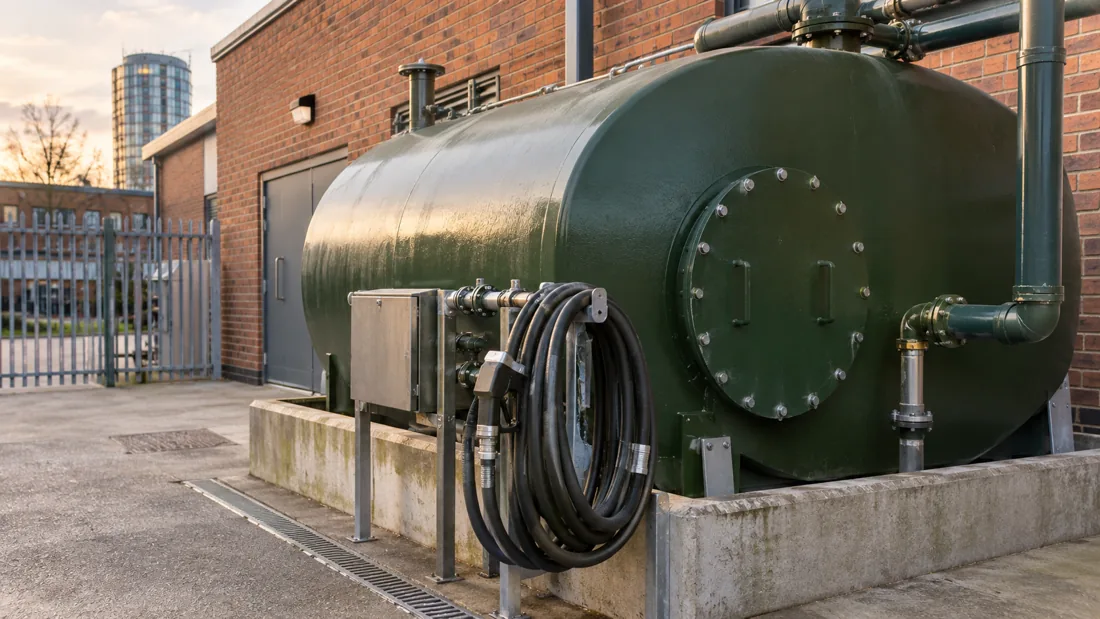
Identify Why The Tank Needs Cleaning
Commercial tank cleaning in Birmingham may be needed after contamination, before an internal inspection, during a product change or ahead of decommissioning. Each reason sets a different finish. A tank being returned to fuel storage has different acceptance requirements from one being prepared for dismantling.
Describe the symptoms rather than prescribing a treatment. Repeated filter blockage, water findings, sediment or a long period out of use can justify investigation, but none proves the same cause. Useful evidence includes maintenance notes, existing sample reports and the history of deliveries or failed equipment.
Cleaning Or Fuel Polishing?
Choose cleaning when the problem includes deposits inside the vessel, sediment on the floor or a need to expose surfaces for inspection. Polishing circulates suitable fuel through filtration and separation equipment. It does not give the same access to settled residues, and it cannot repair corrosion or a leaking shell.
If the fuel is potentially reusable but the tank needs cleaning, the job may require both temporary fuel holding and work on the tank itself. Ask for the separate stages to be described. Returning filtered fuel to a tank that still holds contamination can undermine the purpose of the work.
For a change of stored product, state both the previous contents and the intended replacement. Suitability depends on the tank construction, compatibility and required level of cleanliness. A general clean is not an automatic approval to store a different fuel or chemical.
Plan The Downtime And Fuel Destination
The tank normally needs to be taken out of service for a full clean. Identify every system it supplies and agree the interruption with the relevant facilities or maintenance manager. Standby equipment still needs a continuity decision even when it is not normally running.
Send the tank capacity and your best estimate of the volume left inside. Usable fuel, free water and sludge need different handling decisions. If product is to be retained, suitable holding arrangements, segregation and the route back into service belong in the plan.
Avoid ordering a delivery immediately before planned cleaning unless it has been discussed. A larger volume can change storage needs and transfer time. Equally, do not run critical equipment short of fuel simply to reach an assumed cleaning level. The programme should fit the operation, with the handling method agreed first.
Access Determines The Cleaning Method
External methods through suitable openings may be considered before internal entry. The size and position of access points, internal baffles and tank geometry affect what can be reached. Send photographs of existing hatches and fittings from ground level without opening them.
Where entry is essential, it is a specialist task. HSE’s confined-space guidance says entry should be avoided where possible and otherwise planned with risk controls and emergency arrangements. The cleaning proposal must account for the real tank and the surrounding work area.
A basement installation adds ventilation and hose-route questions. A yard tank may have better vehicle access but less room to separate the cleaning area from forklifts and pedestrians. Tell us about local power availability, site permits and where a collection vehicle could stand, without assuming that a nearby socket is suitable for the equipment.
Inspection And Return To Service
Cleaning can make inspection possible, but inspection is not automatically included in every clean. If you need an assessment of corrosion, internal condition or suitability for continued use, specify that purpose in the enquiry. Agree who will inspect, what they can access and which findings need recording.
A cleaned tank may reveal defects previously concealed by deposits. Allow for the possibility that repairs or replacement need consideration before refilling. The quotation should explain how unexpected findings will be reported and who has authority to approve additional work.
Before the system returns to service, responsibilities for closing access points, checking disturbed connections and authorising refill should be clear. If fuel quality evidence is required by the equipment owner, request the appropriate sampling and testing separately. Visual appearance alone does not establish a laboratory specification.
Cost Drivers And Cleaning Records
Cleaning costs depend on capacity, contamination type, residue volume, access method and the work needed to reach the required finish. Temporary storage, difficult collection access, specialist entry controls and an additional inspection can alter the scope. Unknown contents may need investigation before a meaningful fixed quotation is possible.
Ask for a job record showing the tank identity, purpose of cleaning, method and any limitations. Where inspection or sampling was commissioned, its report should be distinguishable from the cleaning record. Photos can be useful where safe access permits them, but they are not a substitute for the agreed acceptance checks.
Waste documentation follows the materials removed and their classification. Check the proposed carrier and destination, and retain the applicable transfer or consignment records. After handover, discuss how water entry, damaged fittings or a recurring contamination source will be addressed, so the next delivery does not recreate the same problem.
Tank Cleaning: Questions
Will Cleaning Repair A Rusting Tank?
Tank cleaning does not repair a rusting tank. It can expose internal surfaces so an agreed inspection can assess condition, but a clean and a structural repair are separate tasks. Mention visible corrosion or leakage at the enquiry stage and allow for a decision about repair or replacement before the tank is refilled.
Can You Clean A Tank Before A Product Change?
Cleaning before a product change needs the old and proposed contents to be identified. Compatibility, construction and the required cleanliness determine whether reuse is suitable. Include any relevant product information or safety data sheets, and ask for the acceptance criteria to be agreed before cleaning rather than assuming an empty-looking vessel is ready.