Start With The Power It Protects
Commercial generator removal in Birmingham begins with the building’s power requirements. An apparently unused generator may still be part of a standby arrangement, connected to automatic controls or relied upon by a tenant. Establish its role with the responsible electrical or facilities manager before discussing a removal date.
Tell us why it is leaving. A replacement project, end of lease, plant-room conversion or complete site closure changes the interfaces. The enquiry should identify whether the old equipment is to be relocated, assessed for reuse or removed through an appropriate waste route, without assuming a resale value.
Set The Boundary Of The Job
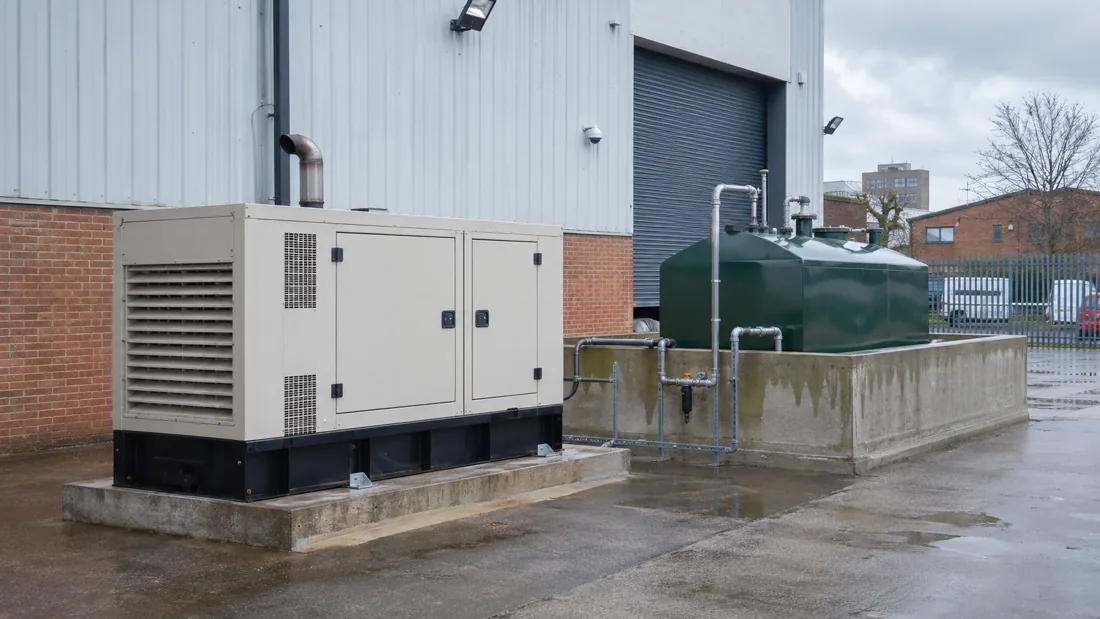
Use an equipment list to guide the initial decision. The generating set, enclosure, integral fuel tank, separate bulk tank, day tank, exhaust and controls may belong to different parts of the project. A quotation for the engine alone will not necessarily clear the installation back to the condition required by a landlord.
If a new generator is taking over, decide which existing components are proposed for retention. Their suitability needs separate confirmation by the relevant designer or installer. Removal of the old machine does not approve the remaining fuel pipework, electrical equipment or exhaust arrangement for another unit.
For equipment intended to move to another site, the lifting and transport plan must protect components needed for recommissioning. For equipment going as waste, handling and destination are different questions. Confirm the intended destination early, particularly where ownership or leasing arrangements need resolving before collection.
Agree Competent Isolation And Continuity
Electrical disconnection and verification belong with competent electrical personnel under the site’s approved arrangements. Automatic start systems and associated sources of energy need to be considered by those responsible. Do not disconnect cables, work inside control panels or try to make a generator ready for collection yourself.
The removal programme should name who releases the equipment, who coordinates permits and who confirms that affected systems can be unavailable. Where standby power is still required, replacement or temporary cover must be planned separately. An outage window is a project decision rather than something to discover after the vehicle arrives.
Allow time for coordination with building management and other contractors. In a multi-tenant property, the person arranging the removal may not control all connected services. A documented release point helps prevent a lifting team arriving while the electrical or operational handover is still unresolved.
Fuel And Other Fluids Affect Handling
State whether fuel is held in an integral base tank, a separate day tank or an external bulk tank. Send available level readings and product details, including any contamination history. Each storage point needs its own decision about recovery, transfer or disposal.
Lubricating oil, coolant and other fluids also need consideration within the dismantling and transport method. Do not assume that a generator can travel in the same condition it last operated. The proposed carrier and removal contractor should agree the handling condition before loading.
If a separate fuel tank is also leaving, link the two scopes explicitly. Its cleaning and removal may require different equipment and a different sequence from the generator lift. Our fuel tank removal guide explains the access and remaining-fuel information needed for that part of the project.
Prove The Route From Base To Vehicle
Send the generator’s data plate, manufacturer information and any available weight or lifting drawings. Dimensions should include the enclosure where it will travel with the set. Do not rely on power output as a way of estimating the equipment’s lifting weight.
Photograph the base, plant-room opening, corridor turns, thresholds, loading area and overhead obstacles. Note whether removable panels or doors belong to the building and who can authorise their removal. A set that arrived before a wall was built may have no simple route back out.
Ground conditions and vehicle position influence the lifting method. Tell us about basement slabs, service covers, shared loading bays and any restrictions on occupying a road or neighbouring land. HSE’s LOLER guidance provides the framework for lifting equipment and lifting operations. The selected operation needs planning around the actual load and location.
Quotation And Completion Evidence
Removal costs reflect equipment dimensions and mass, access, lifting arrangement, fluid management and transport destination. Separate tank works, out-of-hours access, temporary power and building alterations may be additional project items. Ask for exclusions to be visible alongside the quoted scope.
Request a record of the equipment removed, its destination and the agreed status of retained services. Electrical release evidence should come from the competent party responsible for that work. Applicable waste records depend on what leaves as waste, including fluids and associated components.
At handover, confirm the area is left in the specified condition. Removing the set does not automatically include plinth demolition, weatherproofing old openings or making good the entire plant room. Update the asset register and drawings so the building’s remaining standby arrangements are accurately understood.
Generator Removal: Questions
Can You Remove A Generator From A Basement?
Basement generator removal depends on the route, equipment dimensions and the lifting or handling arrangement available. Send photographs of stairs, doors, loading points and the plant-room layout, together with the data plate and drawings if available. A survey may be needed where weight, floor loading or a restricted exit cannot be confirmed from photographs.
Will Generator Removal Include The Fuel Tank?
Generator removal includes a separate fuel tank only when that tank is listed in the agreed scope. Integral tanks, day tanks and bulk storage can need different handling. Identify every fuel vessel and its remaining contents so fuel recovery, cleaning, isolation and disposal can be coordinated with the equipment removal.